


Research papers are really important academic texts that chronicle a researcher’s journey about a topic. It covers everything from the conception of the initial idea to the practical testing and, finally the results.
That’s why it is necessary for writers to take care when writing a research paper. Many things can go wrong with a research paper. Accidental plagiarism, unclear writing, ambiguous points, and whatnot.
These things bring down a research paper’s quality, which in turn hurts its credibility. So, we are going to teach you how to improve your paper and boost its clarity and credibility.
How to Improve the Clarity and Credibility of a Research Paper
Here are some steps you can take to improve the clarity and subsequently the credibility of a research paper.
1. Check Your Sources
A research paper is supposed to provide evidence of whatever new findings it is talking about. Most of this evidence comes from other works by either other authors or the same author. So, any work that is used in a paper needs to be cited.
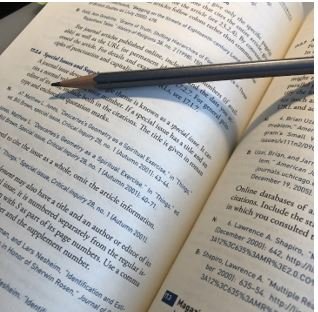
Checking your sources refers to:
- Ensuring that the correct works are cited.
- Ensuring that the correct parts of works are cited.
- The citation and reference entry in the paper is correct.
- The dates and names of authors and publications are correct.
To check your sources, you need to go through your paper and manually check whether each citation is correct or not. Special care is needed for the literature review in the paper as that is the most citation-heavy part of your work.
Credibility is massively increased when readers know that a paper is honest about its sources.
2. Provide a Symbols and Terms Guide
Research papers are typically rich in jargon. Now, readers have trouble understanding industry jargon and abbreviations. If your paper has a lot of technical jargon, and abbreviations then its clarity will be affected.
 So, an easy way to add both clarity and credibility is to provide a legend/guide at the beginning of the paper. In this legend/guide, you need to provide the following things:
- An explanation of all the jargon used in the paper.
- The full forms of all abbreviations used.
- Any symbols used in your diagrams.
- An explanation of new terms you may have coined for your paper.
This legend will make it easy for your audience to understand what everything means. It will reduce their confusion and improve your paper’s credibility.
3. Remove any Ambiguity Regarding Methodology and Limitations
Research papers usually discuss new developments and use experiments to prove them. Any ambiguity in this regard will make your paper lose its credibility and trustworthiness. It will also increase the reader’s confusion since they will be looking for these things.

And you better believe they will be looking for it because that’s how things work in academic circles. Academic readers scrutinize the content to see whether the writer is saying something wrong or not. If they don’t find any clearly listed assumptions and limitations, then they will think of the writer as incompetent.
So, to prevent such things from happening do the following:
- Clearly state early on when writing about your experiments the assumptions you have made.
- Clearly spell out your methodology and how you set up your experiments.
- Don’t leave out any results that are too different from the average.
- List possible explanations for unforeseen results and high deviations.
This will help make your research paper more readable and boost your credibility. Remember, hiding things always results in your credibility being questioned.
4. Write Clearly and Precisely
Research papers are typically highly technical and technical documents can be quite difficult to read. So, one method writers use to reduce reading difficulty is using simplicity. That means that they ditch the flowery sentences and long-winded explanations. Instead, they opt for short sentences and common words (where possible) to keep the readability high.
You should try and proofread your paper to see where you can paraphrase difficult phrases and sentences to improve readability. Getting help from a non-academic/non-technical person is also a good idea. Getting such people to proofread your work will help you find out areas with poor readability.
Then you can either use a paraphrase tool or your own paraphrasing skills to boost their readability. A paraphrase tool is, of course, software that can automatically change the words, phrases, and sentence structure of a given text without actually changing its meaning. Many such tools have built-in features to improve readability, so use them to your advantage.
Conclusion
So, there you have it, four actionable tips for improving the clarity and credibility of your research paper. Many of these tips are supposed to be acted upon before writing your paper, while some of them can only be applied after proofreading. That means that you should be mindful of the clarity and readability of your paper both when preparing for it and proofreading it.
